


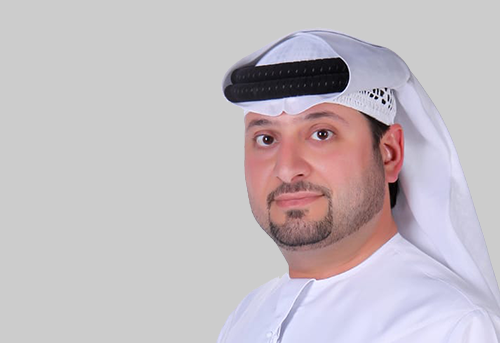


Upgrading and learning new things is the key to success in the current job market, and who could be better than Sultan Karrani to share the insights about the post-pandemic employment sector.
- Do you think COVID-19 has turned the tables in the job market? How do you think companies and individuals have been affected?
- If laying off is ruled out, how can companies sail through this global crisis?? And what do you advise those who lost their jobs?
- You've studied Geology, Human development, Tourism, Law, & Environment affairs. What's the reason behind those specialties in different fields?
- "Self-confidence" is one of the main factors that push a person to get out of their comfort zone and start a new experience professionally, scientifically, or even personally. As a human development professional, what is your all-the-time source of confidence?
- When you were asked why you were so keen to be on social media platforms and post your photos, out of fear about preserving the intellectual property rights of the image, you replied: " It is necessary for me to share some of my pictures on social media, for two reasons: The first is to obtain the experts' comments and draw on their observations and constructive criticism, and the other is to inform people that I am still practicing my hobby and that I am willing to provide my services in this field for a fee. "
Last Reviewed: April 2026 | Sources: DrJobPro Hiring Data Q1 2026.
Sultan Karrani is an Emirati model
who was not satisfied with specializing in one field only. He sought to
diversify his culture, sharpen his skills, and go to photography, human
development, tourism, and law. Besides, being specialized in geology and the environment
and his work in oil and gas for more than 20 years.
In an enriching conversation with Alaa Emra,
Sultan Karrani shares his professional experiences with many other valuable
lessons.
Do you think COVID-19 has turned the tables in the job market? How do you think companies and individuals have been affected?
Indeed, it's no secret that both
companies and individuals are affected by the Coronavirus's emergence. However,
I can say that the decisions resulting from the emergence of the epidemic have
had a far more significant impact than the virus itself. The world's companies
were divided into two parties: Companies have made harsher decisions, and
companies have handled it more quietly without overreacting. But, in all cases,
everyone was affected, especially companies that were going on traditional
systems.
I think employees are less
affected than companies because of the many other options they have. If a
person is underpaid or laid off, for example, he has other options in the
future; Such as returning to his country, if he is not an Emirati, or looking
for another job with a lower salary, even if it is temporary.
But companies, especially those
that have not to anticipate a global crisis or changes due to a virus or
others, are the ones that have been affected the most, and their recovery will
be more complicated.
If laying off is ruled out, how can companies sail through this global crisis?? And what do you advise those who lost their jobs?
Unfortunately, layoffs are an easy
option for companies, especially in global financial crises. However, I
think that this is a quick option that is very influential because when staff
is laid off, there will be many vacant roles in the company. As soon as
the market recovers, companies start looking again for qualified employees...
That's hard.
I always say it's effortless to find staff, but it's hard to find experienced
personnel in the same field and competencies that can collaborate.
Unfortunately, many companies did
not learn from what happened during the economic crisis of 2008 and resorted
quickly to layoffs rather than other options.
We all witnessed what happened
during 2010 and 2011 when the market began to recover, and companies found many
employees, but they were not as competent and experienced as those who were
laid off.
As for employees, this is a challenging
situation! The employee must always bear in mind that no matter how much the
company relies on him, he may be laid off for any reason, or the company may be
closed down for any reason. So, he must always have another option (which we
call plan B); To have his own business, another source of income, or some ideas
to exploit in crisis times. We must never forget that things will not be bad
forever.
Maintaining productivity, even if
the employee does not have a job, enables him/her to acquire new experience and
skills to become his/her strengths when returning to work again.
You've studied Geology, Human development, Tourism, Law, & Environment affairs. What's the reason behind those specialties in different fields?
The reason is straightforward: if
a person specializes in one field and achieves the highest levels of creativity
in it, there is always a possibility that one day this field will not be
in-demand. According to the future outlook reports and future job reports, many
roles are currently in-demand and will not be required in the future, such as
Farmer, teacher, etc.
In other words, I've chosen
different specializations due to variations of needs in the job market. I can
specialize in geology for 20 years, but if something comes up and this
specialization doesn't become in-demand, I'll be in trouble. But when I
specialize in several areas for 20 years, I have different options to move from
one job to another depending on the job market in crises.
"Self-confidence" is one of the main factors that push a person to get out of their comfort zone and start a new experience professionally, scientifically, or even personally. As a human development professional, what is your all-the-time source of confidence?
Self-confidence is not gained through study
but work, hands-on training, and permanent initiative. In a sense, if I'm an
employee and I don't start pitching ideas or implementing them or taking
advantage of my time at work, I won't trust myself.
Many staff members work for 15-20
years, none of whom do work without being asked, and they cannot put forward
ideas because they do not have sufficient self-confidence. Why? Because he
didn't try, he didn't make mistakes and wasn't exposed to all situations, so he
didn't gain confidence.
This also applies to undergraduate
students. It's a trial phase; The student can try and make mistakes and make
mistakes until he gains confidence.
But if an employee keeps working
routinely and doesn't try thinking outside the box, he will always be trapped
in other people's thoughts.
When you were asked why you were so keen to be on social media platforms and post your photos, out of fear about preserving the intellectual property rights of the image, you replied: " It is necessary for me to share some of my pictures on social media, for two reasons: The first is to obtain the experts' comments and draw on their observations and constructive criticism, and the other is to inform people that I am still practicing my hobby and that I am willing to provide my services in this field for a fee. "
In
this context:
- What's the importance of criticism for achieving
success? And what do you advise those who don't accept the other's criticism?
It is
said that the market is both supply and demand. A person cannot achieve any
profit or success without the availability of the other pillar of success, namely,
customers. And in our virtual world today, part of the customers are virtual
customers or customers on social media platforms.
For
example, if I posted a photo and a hundred people liked it, another person
posted a similar one, and a hundred thousand liked his photo. Sure, a hundred
thousand is better than a hundred.
The
more fans there are, the greater the value of the image (product). Therefore,
the one who can satisfy the most significant proportion of people is always the
one who studies the market, analyzes people's opinions and interests, and can,
through criticism, know what the market needs and what products attract
people's attention, and then he can develop his products or services in line
with the requirements of others
So, a
person who doesn't care what other people think, whether they're virtual or
realistic, won't keep up with the market and won't know how to develop his
products and services.
- How can a person turn his passion or hobby into
a paid job?
A
person can transform his passion or hobby into a paid job through one method,
which is: "Mastering what he does."
If we
assume that a person has a passion for writing, he must master what he does,
and then he can offer his product or service to companies, sponsors, or even to
customers directly.
Many
have achieved significant financial wealth and success just by mastering their
hobbies.
And no
one can master anything without passion. This passion is the fuel that drives
human beings to make further progress and overcome all the difficulties and challenges
they face.
How did your social media presence help you during your career journey? And what would you advise today's digital generation to maintain a solid digital brand that opens opportunities doors for them?
My
presence on social media platforms helped me introduce others to what I'm
doing. We're in a time of "promoting," whether it is personal or
commercial. In our time, I see that social media platforms and Google are the CV
of the person.
The
time of sending a CV when applying for a job has now passed. Now social media
platforms and Google determine who the person is, his experience, and his
ability to convince companies.
FOR
EXAMPLE, when I give a lecture, people aren't convinced of what I'm saying
about myself (I have an X degree, a member of X community, etc.).
They
always go to Google and search for the name "Sultan Karrani," Through
Google and social media platforms, they can figure out who Sultan is? What are
his achievements? And how can I benefit from him?
So,
social media platforms and Google are the new CV now.
You mentioned in a "video" on LinkedIn that many people today have a hobby of "collecting certificates." You emphasized that one should understand that it's not about the number of certificates; it's about the value of information and how to benefit from it. Aside from training courses, what other learning methods/tools can hone our skills?
I have
not meant for people to avoid online courses altogether. However, I mean that
people should look more to using the information to their advantage than to go
after certification. Companies don't pay attention to the number of
certificates; they pay attention to utilizing that information and turning it
into expertise and a product.
Therefore,
I think it is necessary to choose courses that help a person in his job. FOR
EXAMPLE, if I work in marketing and advertising, I do not need to attend
courses in food security because it will not benefit me in my field unless I
want to learn something new from the beginning.
If only
attended only for the sake of attendance, these training courses are not
beneficial for the individual or society.
Your history includes volunteering, community participation, and awards as an influential volunteer ... What is the importance of volunteering for an individual and society? Do you remember a lesson or skill you learned while volunteering that was a strong point for you in your career?
Thank
God for my long history of volunteering, and I always say that volunteering is
more beneficial for the individual than corporations or society.
How?
Through volunteering, the volunteer sharpens his skills: time management
skills, communication skills, event organizing skills, even financial
management skills. Volunteering gives a person a "free" opportunity
to hone his skills.
For
example, Ten years ago, I gave my first lecture to an audience of about 150
people in Abu Dhabi, and it was a volunteer lecture. Volunteering, in this
case, enabled me to break the barrier of fear and make me stand up and speak
boldly in front of others. Without a doubt, I made a mistake, but over time, I
could fix those mistakes, and volunteering helped me a lot throughout my work
as my work needs communication skills to face the crowd.
So, I assert
that volunteering is a free opportunity that enables individuals to hone their
skills for their different fields of specialization.
As an Emirati, what are the differences between the job market 10 years ago and the current job market? What are the required skills now that will be in higher demand in the future?
- What kind of skills do you think individuals can
focus on to grab a good opportunity in the post-pandemic world?
There
is no doubt that the job market is constantly changing. And even what we
currently live in will change in 10 years.
According to the reports I have read and the experiences I have, I see that the future will be for technology and artificial intelligence. However, the importance of humane engagement should not be neglected.
I think
that artificial intelligence now plays a vital role in employment, especially
when talking about websites and applications, and I think that from now on, the
course of things will change completely, whether in the field of oil or
otherwise, and technology fields will lead.
- What kind of professions will witness a boon?
There are many impacts of the Coronavirus pandemic. Some of those effects come in the field of employment and are secondary but vital. And one of those influences that are rarely reported in the media is the psychological effect. There will be an excellent role for psychiatrists during the coming period due to the high rates of dealing with screens, which will lead to some psychological disorders and problems for individuals, old or young. Therefore, I see that the psychosocial support provided by counselors and psychiatrists will emerge starting now as many who suffer from depression and dissatisfaction.
what are your future goals, and in what field will your sixth degree be?
There are two main goals that I strive to achieve:
First: Approaching "writing." This is a long-term goal as I'm now busy with my job. So, I will start at that stage after retirement, and my writing will include everything related to my work and life experience.
Second: I have a great passion for delving deeper into the field of "law," and this is a challenge I set for myself. Law has become a fertile field for me to develop myself, as it is not limited to legal professionals but has become a part of the individual's life in the UAE and any country in the world.
Drjobpro wishing Mr. Sultan Karrani SUCCESS in everything he does! Good luck!
Frequently Asked Questions
What is the key insight on Sultan Karrani: Google and Social Media Platforms are the new CV?
This guide is based on current DrJobPro hiring data and regional labour market research updated for 2025.
How do I find relevant jobs?
Browse DrJobPro at drjobpro.com/jobs — filter by location, salary, and experience level.
Is this advice current for 2025?
Yes. All data is reviewed quarterly using live hiring data from DrJobPro.

 2026-05-01
 2026-05-01
 2026-05-01
 2026-05-01
 2026-04-08


