





A hiring team finishes 40 first-round interviews in a week. By Friday, feedback lives in five places - scorecards in one system, notes in another, recordings somewhere else, and gut-feel decisions inside Slack threads. This is where ai interview analysis tools enter the conversation. Not as a novelty, but as a response to a real operational failure: too much interview data, not enough structured decision-making.
The market is crowded with products that promise better interviews through transcription, summaries, sentiment analysis, coaching prompts, and candidate scoring. Some of those features are useful. Many are isolated. That distinction matters more than the feature list.
If you are evaluating these tools as an employer or talent leader, the real question is not whether AI can analyze an interview. It can. The real question is whether that analysis improves hiring outcomes inside your actual workflow.
What ai interview analysis tools are really for
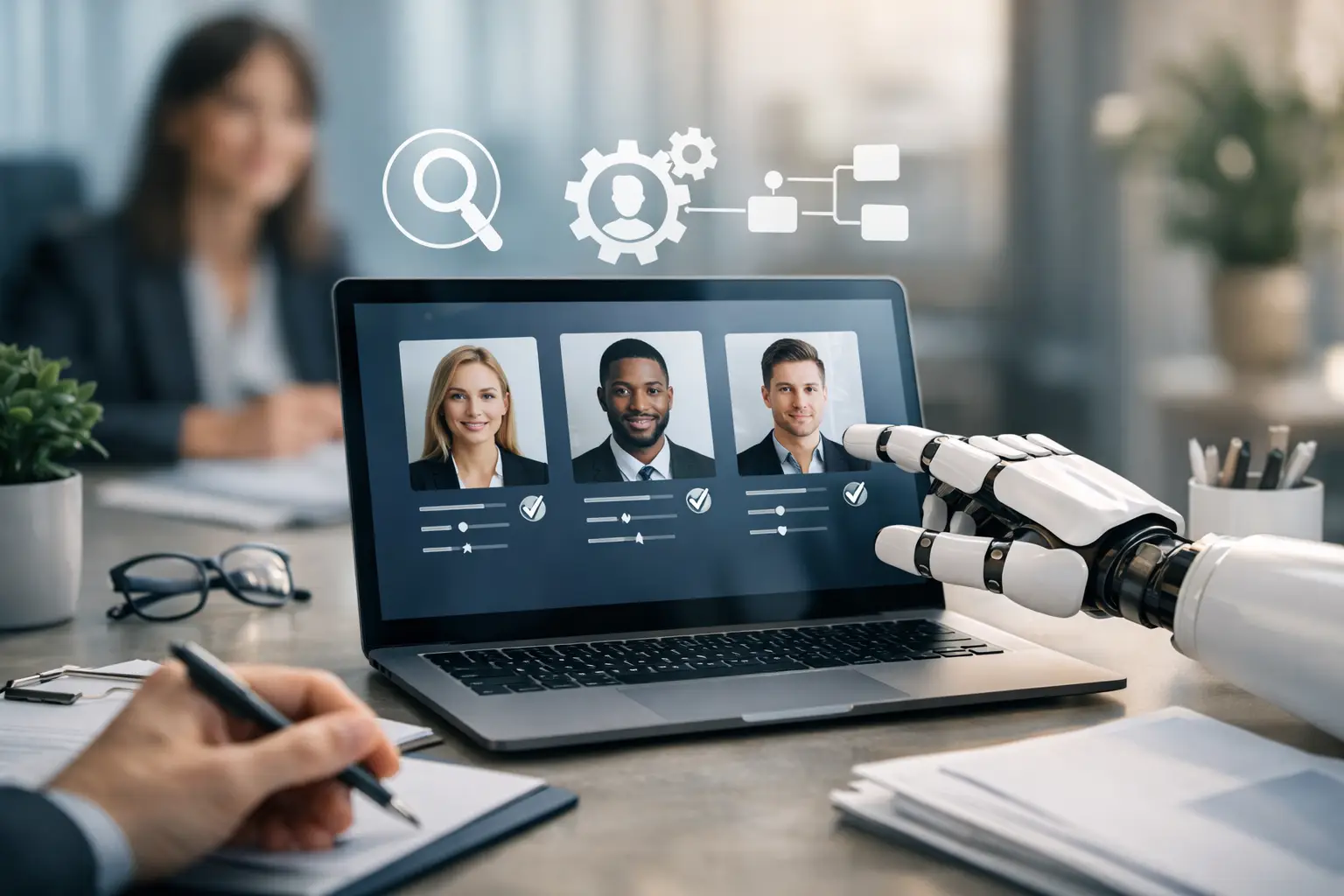
At their best, ai interview analysis tools convert unstructured conversations into usable hiring signals. They capture what was said, organize it against competencies, surface patterns across interviewers, and reduce the lag between interview completion and decision-making.
That sounds simple. In practice, the value comes from consistency. Interviews are one of the least standardized parts of hiring. Different interviewers ask different questions, emphasize different traits, and document feedback with wildly different levels of detail. AI analysis can impose structure where human process usually breaks down.
For high-volume or distributed hiring teams, that structure can be the difference between a scalable interview process and a noisy one. Recruiters move faster when notes are generated automatically. Hiring managers make better decisions when evaluations map to clear criteria. Operations leaders get clearer visibility when interview data is captured in one place instead of fragmented across tools.
The problem with standalone AI interview analysis
A lot of vendors treat interview analysis as if it exists in isolation. Record the meeting, generate insights, score the candidate, and move on. That model is too narrow for modern recruiting.
Interview analysis is not a final product. It is one step in a larger decision chain that starts with sourcing and screening and ends with offers, approvals, and compliance. If the analysis sits outside that chain, teams still have to export notes, re-enter feedback, chase alignment, and manually move candidates forward. The AI may save minutes inside the interview, while the process still loses days outside it.
This is where many buying decisions go wrong. Teams compare tools on transcript quality or dashboard polish and miss the operational question: what happens after the interview analysis is complete?
If the answer is more manual coordination, the tool is not fixing the hiring system. It is adding another layer to it.
What to look for in AI interview analysis tools
The strongest platforms do more than summarize calls. They make interview data operational.
Start with structured evaluation. A useful system should map interview output to competencies, role requirements, or scorecards that your team already uses. Generic summaries are fine for convenience. They are weak as a hiring standard.
Next is workflow integration. Interview insights should feed directly into the candidate profile, pipeline stage, and hiring decision process. Recruiters should not have to copy findings into an ATS or translate them for hiring managers in a separate tool.
Speed also matters, but not in the way vendors usually present it. Fast transcripts are not the point. Faster decisions are. If AI analysis reduces interviewer lag, improves debrief quality, and helps teams reach a defensible yes or no sooner, then it is doing its job.
Then there is standardization. Good tools help interviewers stay aligned by reinforcing question sets, evaluation criteria, and documentation quality. Without that layer, AI simply analyzes inconsistent inputs and produces neatly packaged inconsistency.
Finally, pay attention to reporting. Leaders need more than candidate-level summaries. They need patterns: where interview bottlenecks happen, which interviewers create delay, where pass-through rates shift, and how evaluation behavior changes by team or role.
Where these tools create real value
The most immediate gain is time compression. Recruiters and hiring managers spend less time writing notes, collecting feedback, and reconciling contradictory impressions. That shortens the gap between interview and action.
The second gain is better decision quality. Not perfect decision quality - hiring will never be perfect - but better. Structured analysis helps teams compare candidates on shared criteria instead of whichever interviewer has the strongest opinion in the room.
The third gain is auditability. When interview reasoning is documented in a consistent format, organizations have a clearer record of how decisions were made. That matters for internal accountability and, depending on the organization, legal and compliance discipline.
There is also a coaching benefit. Teams can use interview analysis to identify weak questioning, shallow follow-up, or poor scorecard completion. That turns the interview process into something measurable and improvable, rather than a black box run on habit.
The trade-offs leaders should not ignore
AI analysis is not automatically objective. If your interview design is weak, your evaluation criteria are vague, or your interviewers are inconsistent, AI can scale those flaws instead of solving them.
There is also a risk of over-scoring. Some tools present candidate ratings with a level of precision that feels scientific but rests on shaky assumptions. Hiring leaders should be cautious about any system that turns human conversation into a single number without clear context. A score can help prioritize review. It should not replace judgment.
Privacy and candidate trust matter too. Recording and analyzing interviews raises legitimate concerns around consent, data retention, and fairness. Employers need clear policies and strong governance, especially when hiring across regions with different legal expectations.
And then there is adoption. A feature can be technically impressive and still fail if interviewers do not trust it, if managers do not use the outputs, or if recruiters have to work around it to keep the process moving.
AI interview analysis tools work best inside a hiring system
This is the shift many employers are making now. They are moving away from point solutions and toward hiring infrastructure.
When interview analysis is part of a broader recruitment operating system, the value compounds. Candidate data, interview insights, pipeline movement, team feedback, and offer generation all sit in the same environment. That removes handoffs, reduces duplication, and gives hiring teams one source of truth.
This is not a tool upgrade. It is a system upgrade.
In that model, AI interview analysis stops being an isolated feature and starts functioning as decision intelligence within the hiring workflow. Screening informs interviews. Interviews inform stage progression. Stage progression informs approvals. Approvals trigger offers. Every step is connected.
That connection is what separates experimentation from operational improvement. Dr.Job, for example, is built around that system-level approach, where native video interviewing and AI-driven evaluation sit inside a single recruitment operating environment rather than outside it.
How to evaluate the right fit for your team
If your hiring volume is low and your interview process is simple, a lightweight analysis layer may be enough. You may just need transcripts, summaries, and faster note capture.
If you are hiring across multiple roles, teams, or geographies, the stakes change. You need consistency, reporting, governance, and workflow automation. At that point, the tool itself matters less than the architecture around it.
Ask practical questions. Does the platform reduce system sprawl or increase it? Does it standardize evaluation or just summarize conversations? Does it help your team make faster, clearer decisions, or does it create more data for people to interpret manually?
Those questions cut through hype quickly.
The best ai interview analysis tools do not just tell you what happened in an interview. They help your organization act on that information with speed, consistency, and control. That is what modern hiring teams actually need. Not more isolated intelligence, but infrastructure that turns intelligence into outcomes.
If your interview process still depends on scattered notes, delayed feedback, and subjective debate, adding AI alone will not fix it. But putting interview analysis inside a unified hiring system can. That is where efficiency stops being a promise and starts showing up in your time-to-hire, your decision quality, and your ability to scale with confidence.
 2026-04-08
 2026-04-06
 2026-04-04
 2026-04-04
 2026-04-03


